Blessings Mashaya, BTech | Harare Polytechnic, Data Journalism Assignment
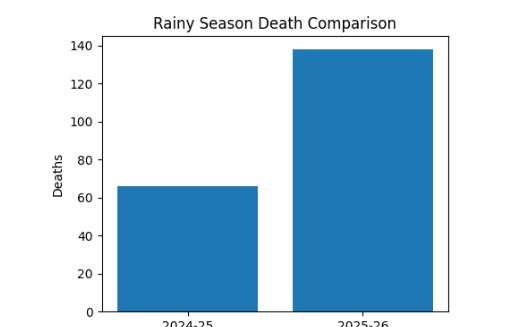
Zimbabwe’s 2025 – 2026 rainy season was the deadliest in recent years, claiming at least
138 lives and exposing weaknesses in infrastructure, housing, disaster preparedness and
emergency response systems.
According to the Department of Civil Protection, the death toll more than doubled from the 66 fatalities recorded during the previous rainy season, representing a 109 percent increase.
The sharp rise in fatalities occurred despite ongoing national disaster risk reduction
programmes, raising questions about the country’s preparedness for increasingly severe
weather events associated with climate change.
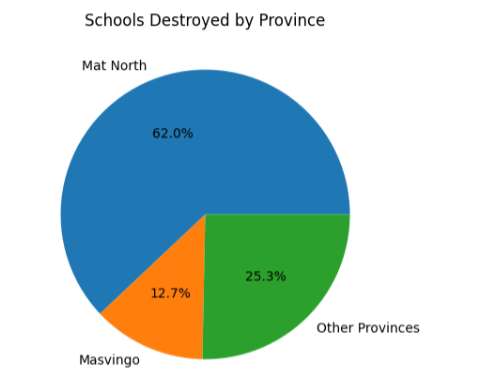
Across the country, 8,352 houses were affected, 237 schools destroyed, 21 bridges
damaged, and 15 health facilities were damaged, disrupting access to healthcare services.
National Damage Overview
Indicator Value Impact
Deaths 138 Deadliest season in years
Houses affected 8,352 Mass displacement
Schools destroyed 237 Education disruption
Bridges damaged 21 Transport isolation
Health facilities 15 Healthcare disruption
Rainy Season Death Comparison
Zimbabwe Provincial Heat Map
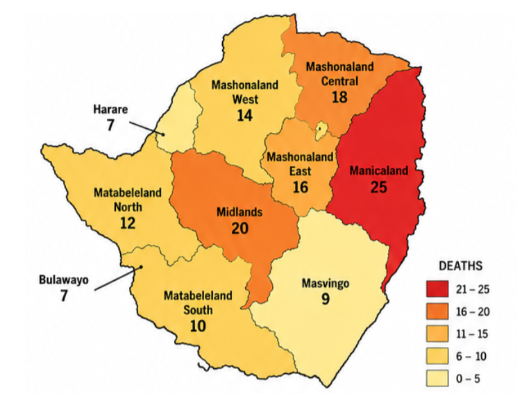
The map below shows provinces colour coded according to fatalities recorded during the
rainy season.
Zimbabwe: Deaths by Provinces (2025–2026 rainy season)
Source: Department of Civil Protection, 2026
Deaths by Province
Source: Department of Civil Protection, 2026
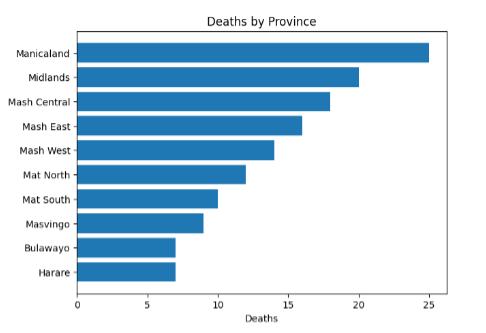
Manicaland recorded the highest fatalities, followed by Midlands and Mashonaland Central,
demonstrating that flood-prone and rural provinces experienced significantly higher risk.
Manicaland recorded the highest fatalities during the rainy season largely due to its
mountainous terrain, high rainfall and frequent exposure to cyclones, which trigger flash
floods and landslides.
The impact is worsened by settlements in high-risk areas such as riverbanks and steep
slopes, as well as poor infrastructure and weak housing structures in rural communities,
making residents more vulnerable to disaster.
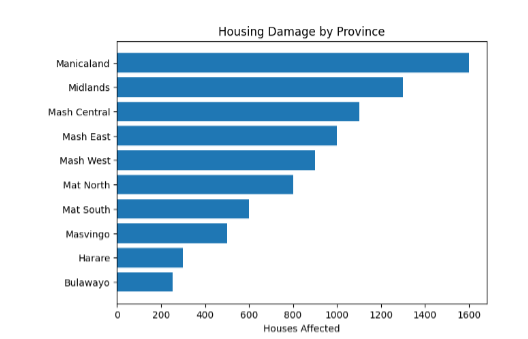
Housing Damage by Province
Source: Department of Civil Protection, 2026
Schools Destroyed by Province
Analysis
Manicaland recorded the highest number of deaths, reflecting its long-standing
vulnerability to floods, cyclones and landslides. Midlands and Mashonaland Central also
experienced significant fatalities, suggesting that disaster risk is no longer confined to
traditional high-risk areas.
The data reveals that fatalities were driven not only by severe weather, but also by weak
infrastructure, unsafe housing, delayed emergency access, and continued exposure to high-
risk environments. Provinces with poor road infrastructure and vulnerable housing
structures experienced the highest levels of destruction.
The destruction of schools, bridges, and health facilities disrupted essential public services,
while washed-away crops worsened food insecurity in affected communities.
Thousands of families were displaced after homes were destroyed, while the loss of schools
and health facilities disrupted access to education and healthcare services in affected
communities.
Conclusion
As extreme weather events become more frequent, the findings suggest that investment in
resilient infrastructure, early warning systems, safer housing and community based disaster
preparedness will be critical in reducing future loss of life.