Zimbabwe has perfected the art of celebrating sporting success while failing to invest in it.
We are a nation that proudly raises its flag when our athletes triumph, celebrates champions with patriotic speeches and invokes national pride whenever international recognition beckons. Yet, when the moment arrives to put money behind the rhetoric, a disturbing silence descends.
The predicament confronting Harare Kings, Zimbabwe’s basketball champions and representatives in the Basketball Africa League (BAL) qualifiers, is a painful indictment of this contradiction.
Here is a team that has done everything expected of a champion.
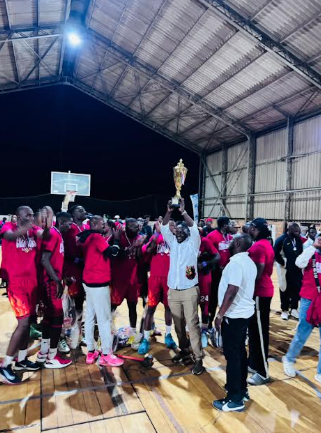
In a remarkable 2025/2026 season, Harare Kings conquered the Harare Basketball Association Super 6 League before going on to win the national championship, culminating in a commanding 82–40 victory over JBC in the national final.
Through discipline, determination, sacrifice and sporting excellence, the Kings earned the right to represent Zimbabwe on the continental stage.
They have won their battles on the court, but now find themselves fighting a different and perhaps more frustrating battle off it: the struggle to secure the financial resources required to compete.
The club requires substantial funding to meet the costs of international travel, accommodation, registration, player welfare, medical support and other tournament-related expenses.
Yet, rather than enjoying the collective backing of a nation eager to see its champions succeed, the Kings have been left navigating the difficult terrain of sponsorship hunting.
This raises a fundamental question: what is the value of winning a national championship if the reward is not an adequately supported opportunity to compete internationally?
The issue is not simply about a basketball club looking for money. It is about Zimbabwe’s sporting priorities, the responsibilities of government, the attitude of corporate institutions and the uncomfortable reality that some sporting disciplines appear to matter considerably more than others.
Imagine the excitement if a Zimbabwean football club had won its national championship and qualified for a major continental competition.
The headlines would be extensive, sports programmes would devote considerable airtime to the team’s preparations, and the conversation around sponsorship would likely attract the attention of businesses eager to associate their brands with the campaign.
Corporate executives would be approached, partnerships explored and the prospect of international representation marketed as an opportunity to promote both the club and the country.
Would Harare Kings be facing the same struggle if they were a football club?
It is a difficult question, but one that deserves an honest answer.
Football is undoubtedly Zimbabwe’s most commercially visible sport, and its clubs have also endured serious financial challenges.
Nevertheless, the scale of corporate interest that football can command demonstrates that money can be mobilised for sporting properties when businesses recognise commercial value in them.
The question is why a national basketball champion, having achieved the very success that sponsors claim to seek, should struggle so desperately to attract comparable attention.
This is not an argument against football. Football deserves investment, and its commercial appeal should be celebrated.
The problem arises when the popularity of a sporting discipline becomes the principal determinant of whether its champions receive meaningful support.
Basketball players wear the same national colours, sing the same national anthem and represent the same country.
Their achievements should not be treated as less deserving simply because their sport commands a smaller domestic audience.
Zimbabwe cannot speak convincingly about developing sport while allowing the commercial visibility of a discipline to determine whether its athletes can fulfil the opportunities they have earned.
The Government of Zimbabwe must also confront its responsibility in this matter.
The development of sport is not merely about constructing facilities, organising competitions or issuing statements congratulating successful athletes.
It also requires the creation of an enabling environment in which sporting institutions can grow, compete and represent the country beyond its borders.
No reasonable person expects government to finance every club or assume responsibility for every sporting expense. Public resources are limited, and any assistance must comply with established financial and accountability requirements.
However, there is a substantial difference between demanding that government pay every bill and expecting it to provide leadership when a national champion faces a critical funding shortfall.
The Ministry responsible for sport, the Sports and Recreation Commission and the relevant basketball authorities could bring the club and potential sponsors together, explore lawful forms of assistance and help coordinate a credible national sponsorship initiative.
Government has the convening power to bring institutions around a common objective.
It can facilitate engagement, encourage private-sector participation and ensure that the country’s sporting ambitions are matched by practical action.
When a Zimbabwean team qualifies for a continental competition, its participation becomes more than a private club matter. It becomes an opportunity to promote the country, develop local talent and demonstrate the competitiveness of Zimbabwean sport.
The responsibility for supporting that opportunity should therefore extend beyond the club itself.
Corporate Zimbabwe must equally answer some difficult questions.
Banks, telecommunications companies, mining houses, retailers, fuel suppliers and other major businesses frequently speak about corporate social responsibility, youth empowerment, community development and national pride.
These are commendable commitments, but they must be reflected in the decisions companies make when allocating sponsorship budgets.
Harare Kings offer an identifiable sporting property with a clear achievement, a defined international campaign and an opportunity for a sponsor to associate itself with Zimbabwean representation on a continental platform.
Their success provides a foundation upon which a commercial partnership can be built. The challenge is to convert that sporting achievement into a compelling sponsorship proposition.
A properly structured partnership need not depend on a single company carrying the entire financial burden.
One business could support travel, another accommodation, another medical and player welfare requirements, while other partners contribute towards equipment and tournament expenses.
With transparent budgeting, measurable deliverables and professional reporting, the burden could be shared among several partners, making the campaign more manageable and commercially attractive.
Corporate sponsorship is not charity.
It is an investment that should deliver value to both the sponsor and the recipient.
But businesses must also recognise that investing in less commercially established sports can create long-term value by developing new audiences, supporting young athletes and demonstrating a commitment to inclusive national development.
If corporate Zimbabwe invests only where the audience is already large, it risks perpetuating the very inequalities that prevent other sporting disciplines from growing.
The predicament facing Harare Kings should also be considered alongside the challenges experienced by other Zimbabwean basketball institutions.
When successful teams repeatedly encounter difficulties financing continental participation, the problem cannot simply be dismissed as poor fundraising by individual clubs.
It points to a broader weakness in the organisation and financing of elite sport.
Zimbabwe needs a predictable system through which national champions can plan for international participation.
Such a framework could include a transparent national-champions sponsorship programme, structured partnerships between sporting authorities and private businesses, and an annual support mechanism for qualifying teams.
Assistance could be conditional on verified qualification, approved budgets, financial reporting and clear performance objectives.
Such an arrangement would protect accountability while ensuring that deserving teams are not left to organise international campaigns through last-minute appeals.
The consequences of neglecting this responsibility extend far beyond a single tournament.
International competition exposes players and coaches to stronger opponents, improves technical standards and provides valuable experience for future campaigns.
It also creates opportunities for young athletes to see a realistic pathway from domestic competition to continental participation.
When national champions struggle to finance that next step, the message to aspiring players is deeply discouraging. They are told to work hard, remain disciplined and win, but the reward for doing so may be an opportunity they cannot afford to take up.
There is also a national branding opportunity at stake.
The Basketball Africa League is a significant continental basketball platform, and participation offers Zimbabwean players an opportunity to compete against some of Africa’s best talent.
A credible campaign can generate international exposure, strengthen the domestic game and create commercial opportunities that may benefit the sport well beyond the immediate tournament.
Yet these opportunities cannot be realised if the team’s preparation is undermined by financial uncertainty.
The immediate priority should be straightforward.
The relevant government institutions, the Sports and Recreation Commission, the Basketball Union of Zimbabwe, and potential corporate partners should urgently engage Harare Kings to establish the precise funding gap and identify practical ways to close it.
The club, for its part, should present a verified budget, disclose sponsorship commitments already secured and provide clear accountability for every contribution received.
This should not end with a once-off rescue effort. Zimbabwe must use the experience to establish a fairer and more sustainable approach to supporting national representatives across sporting disciplines.
The next team to qualify should not have to begin its international campaign by pleading for the means to participate.
The country must stop confusing applause with support. Applause costs nothing; investment requires commitment, planning and accountability. It is easy to congratulate champions after victory, but genuine support is demonstrated when resources are mobilised to help them take the next step.
Harare Kings have already demonstrated their worth on the basketball court.
They have won their domestic competitions, earned their continental opportunity and given Zimbabwe something to celebrate.
They should now be concentrating on tactical preparation, physical conditioning and the challenge of competing against African opposition, rather than worrying about whether they can afford to get there.
The question facing Zimbabwe is no longer whether the Kings deserve support.
Their achievements have answered that question. The issue is whether government and corporate Zimbabwe are prepared to translate their repeated declarations of national pride into meaningful action.
A country cannot continually demand international results from its athletes while neglecting the support structures that make those results possible.
Nor can it claim to promote youth development while leaving talented young people to discover that sporting excellence alone may not be enough to open the next door.
The Kings are not asking Zimbabwe to manufacture champions.
They have already become champions. They are asking for a fair opportunity to represent the nation whose colours they have earned the privilege of wearing.
If this were a more commercially dominant sport, the response might well have been different. That possibility should trouble every stakeholder who genuinely believes in equal opportunity and the development of Zimbabwean sport.
Harare Kings have earned their date with destiny.
The question is whether Zimbabwe will stand behind them or remain a spectator while its champions struggle to finance the journey.
The greatest sporting embarrassment would not be for the Kings to lose to a stronger opponent on the African stage.
It would be for them to lose the opportunity to compete because their own country failed to support them.
A nation that celebrates its champions but abandons them when they need support must ask itself whether it truly values sporting excellence—or merely enjoys the spectacle of victory.