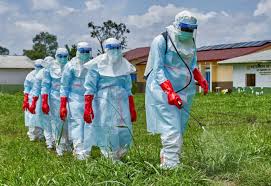
Harare- Government said the country hasn’t recorded any case of Ebola, and the country is prepared against the outbreak of the disease.
Responding to questions during the post-cabinet media briefing, Health and Child Care minister Dr Douglas Mombeshora said cabinet approved the establishment of a provisional Ebola Virus Disease Preparedness Contingency Fund based on a rapid cost needs assessment covering surveillance, point of entry, preparedness, laboratory strengthening, mobilisation of infection prevention, control commodities, and rapid response deployment.
He also said the nation has an integrated disease surveillance and response (IDSR) system in place, supported by weekly epidemiological reporting and trained surveillance personnel.
According to World Health Organisation, (WHO), the Ebola outbreak has recorded 750 cases in the Democratic Republic of Congo and two confirmed imported cases in Uganda, becoming active cross-border transmission.
Zimbabwe’s risk is primarily driven by population mobility across regional borders, necessitating strengthened early detection, rapid containment capacity and revamped border health security measures.
“We have not had any patients so far in Zimbabwe. But our proximity to the DRC and the related movements of personnel through the borders, DRC, Zambia, Zimbabwe, DRC, Tanzania, Tanzania, Zimbabwe, and also Angola.
“All these countries being in sudden, there’s a very high risk that there may be travellers who may get to Zimbabwe.
“But I want to assure you that at the moment, we have not had a case in Zimbabwe, and all measures that we are taking to protect our citizens are only preventive measures.
“We have activated our centre, the Public Health Emergency Operating Centre, which is at Parirenyatwa.
“To train people and raise awareness campaigns to the public, especially to let the public know the signs and symptoms of the disease.
“We have also made our trained staff aware at all port health entry points, both by air and by road, to make sure that they are aware and to start screening people as they cross the borders.
“The main screening is in Zimbabwe,” said the minister.
Dr Mombeshora further said, everything has to do with temperature.
“This is part of the disease, and it’s called hemorrhagic fever.
“It causes high temperature, starting with flu-like illness, general weakness, and proceeding to severe symptoms, abdominal pains, vomiting, and usually bleeding.
“Bleeding from various orifices, from the nose, from even the eyes, the mouth, from the gums.
“And internal bleeding through the gut, and may end up passing blood too.
“So we want to make sure that all our people are aware of these symptoms and the fever, which can be detected through our scanners at the border post.
“These have already been activated,” he added.
The minister also said that they are making sure that laboratory systems are in place to be able to test for the virus.
“Usually, when there’s an outbreak, regions are divided into several regions.
“We are part of the southern region, and each region will have one center dedicated to dealing with epidemics.
“And we are in a region where South African lab, which is a reference lab, is the lab that we normally use.
“CDC Africa will assist with the transportation of specimens to that lab, and also payment for the testing at that lab.
“But we as a country, we have got the capacity and trained staff and the equipment to also test for those viruses.
“And currently, we have applied to CDC Africa for the supply of the reagents, so that we are also able to test should we have any suspicious cases in Zimbabwe.
“And then the tests will be done here.
“We have requested the reagents to test for the Ebola virus, but we have also requested the reagents to test for the antiviral.
“As you know, we have some suspects, some contact cases whom we are monitoring.
“All this, together with the strengthening of our health systems, will help us, enable us to deal with cases should they arise.
“I should say that CDC Africa has agreed to give us the reagents which we use for laboratory testing, so that we are fully prepared for any eventuality.
“I think at the moment, that’s what we have done. We are also going to be engaging the community, including our traditional leaders, so that they are also aware and will help us in mobilising communities during awareness programmes.”