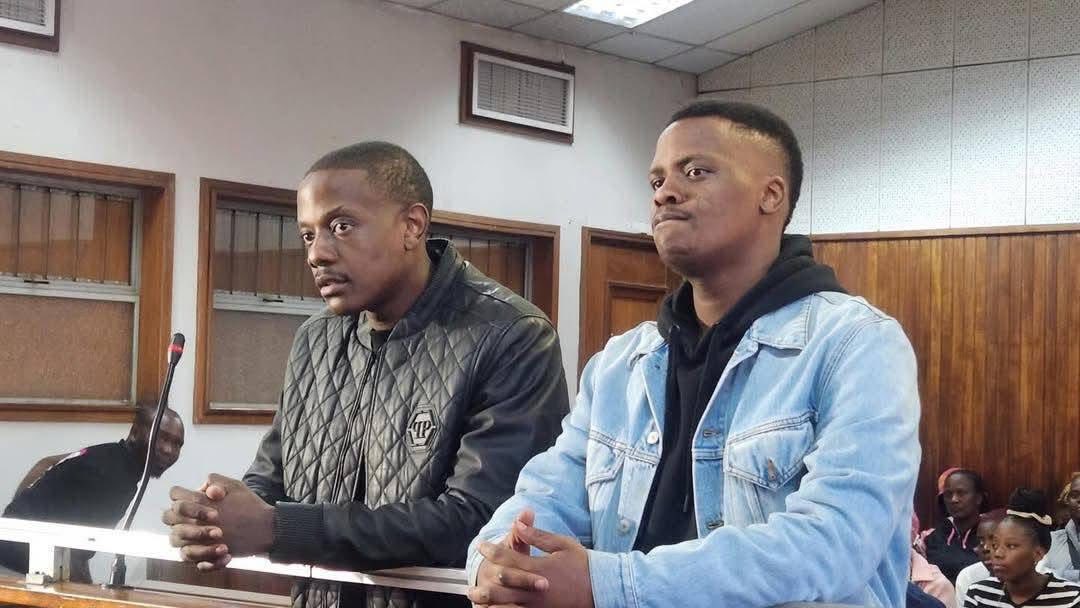
How did Chatunga Mugabe plead guilty in the shooting incident?
Why did Chatunga plead guilty when the gun had not yet been found?
Will he be deported?
Where is the gun?
Chatunga’s shooting case, blow by blow
The investigating officer confirmed that the victim was shot.
He also confirmed that compensation was given to the victim and that he himself received money.
The victim received the money.
The investigating officer said he had no information about the compensation money. He also said he had no information that the victim had been paid some money.
The magistrate must be satisfied that the victim was given the money.
The police should confirm.
The magistrate then asked the lawyer to comment on the gun.
The court requested confirmation on whether the money was received.
Mugabe’s son and social media debate
Mugabe’s son’s guilty plea to the shooting incident has triggered debate among social media users, with some raising questions about whether he will be jailed or deported.
Chatunga and his co-accused pleaded guilty in the shooting case.
Chatunga pleaded guilty to pointing a firearm and being an illegal immigrant in South Africa.
His cousin, Tobias Matonhodze, pleaded guilty to attempted murder, defeating the ends of justice, illegal immigration, and possession of ammunition.
Lawyer’s plea and requested outcome
Their lawyer, Laurence Hodes, asked for suspended sentences for both men. The aim was for the punishment to serve as a “warning,” along with a monetary fine and compensation to the victim.
Both men also indicated they were willing to self-deport.
Postponement and reasons
The matter was postponed to April 24 to establish whether the victim, Sipho Mahlangu, has been compensated, and to seek their cooperation in locating the firearm.
Court details
The pair is appearing in the Alexandra Regional Court north of Johannesburg.
This relates to a shooting incident involving an employee at the Mugabe residence in Hyde Park in February.
The gun used was searched for at the house, but it was not discovered.
Charges and separation of cases
They appeared before the court, charged with attempted murder, applicable to both of them, but the matter was later separated, resulting in Tobias pleading to the relevant charges.
Why did they not apply for bail
At first, they wanted to apply for bail, but they did not, after they discovered that the State would object to the application, citing their immigration breaches.
They then decided to go for the plea under section 112 of the Criminal Procedure Act.
This is when an accused pleads guilty and approaches the prosecutors to plead not to waste time and resources.
This is when the accused settles an agreement with the State.
Through their lawyers, the two approached the State, agreed to plead guilty, and sought a suspended jail sentence.
The magistrate was also informed of the status, and it is up to the magistrate—who has discretion—to agree.
Conviction and the “toy gun” issue
He pleaded guilty and was convicted in South Africa. He is now a criminal.
Initially, they used the doctrine of common purpose with his cousin, meaning that if the accused agreed to commit a crime, they became accomplices.
The charge was based on the doctrine of common purpose.
Chances are that this motivated the defence lawyers, and later they were no longer charged on the doctrine of common purpose.
Chatunga was only found guilty of pointing a firearm, but using a toy gun.
It was not a real shotgun, but it does not matter as long as they pointed the gun, whether it was a toy or not.
Immigration charge for Chatunga
The second charge for Chatunga is immigration. According to the State, his visa expired last year, in October. It was also cited that he is a businessman.
Analysis
For pointing the firearm
For pointing the firearm, there is a chance he can be given a suspended sentence.
For immigration
For immigration, there is a chance he can be fined and deported, rather than jailed.
For Tobias
He admitted to all the charges: attempted murder and the use of an illegal firearm.
Statements by Advocate Hodes
Advocate Hodes said the State accepted their plea, and what is important is that the State accepted the plea and proposed the sentence.
They are single, not married. They have no previous convictions and no previous arrests, and these were convincing mitigations.
State vs Defence (compensation and gun discovery)
The investigating officer confirmed that the victim was shot, that he gave compensation to the victim, and that he received money.
The victim received the money.
The investigating officer said that he had no money for compensation and that he had no information that the victim had been paid some money.
The magistrate must be satisfied that the victim was given the money.
The police need confirmation.
He also said that the gun has not been found, and the magistrate then asked the lawyer to comment on the gun.
The court requested confirmation on whether the money was received.
Where is the gun?
He admitted that he committed the crime.