Mirirai Nsingo, Zimdailyjounal Correspondent
Digital learning is transforming Zimbabwe’s rural classrooms, making education more interactive and inclusive, particularly for learners with disabilities who often face additional barriers in accessing education.
At St Michael’s Mambo Primary School in Buhera, digital devices are helping pupils with special educational needs participate more easily in classroom activities, learn independently and overcome some of the challenges associated with traditional teaching methods.
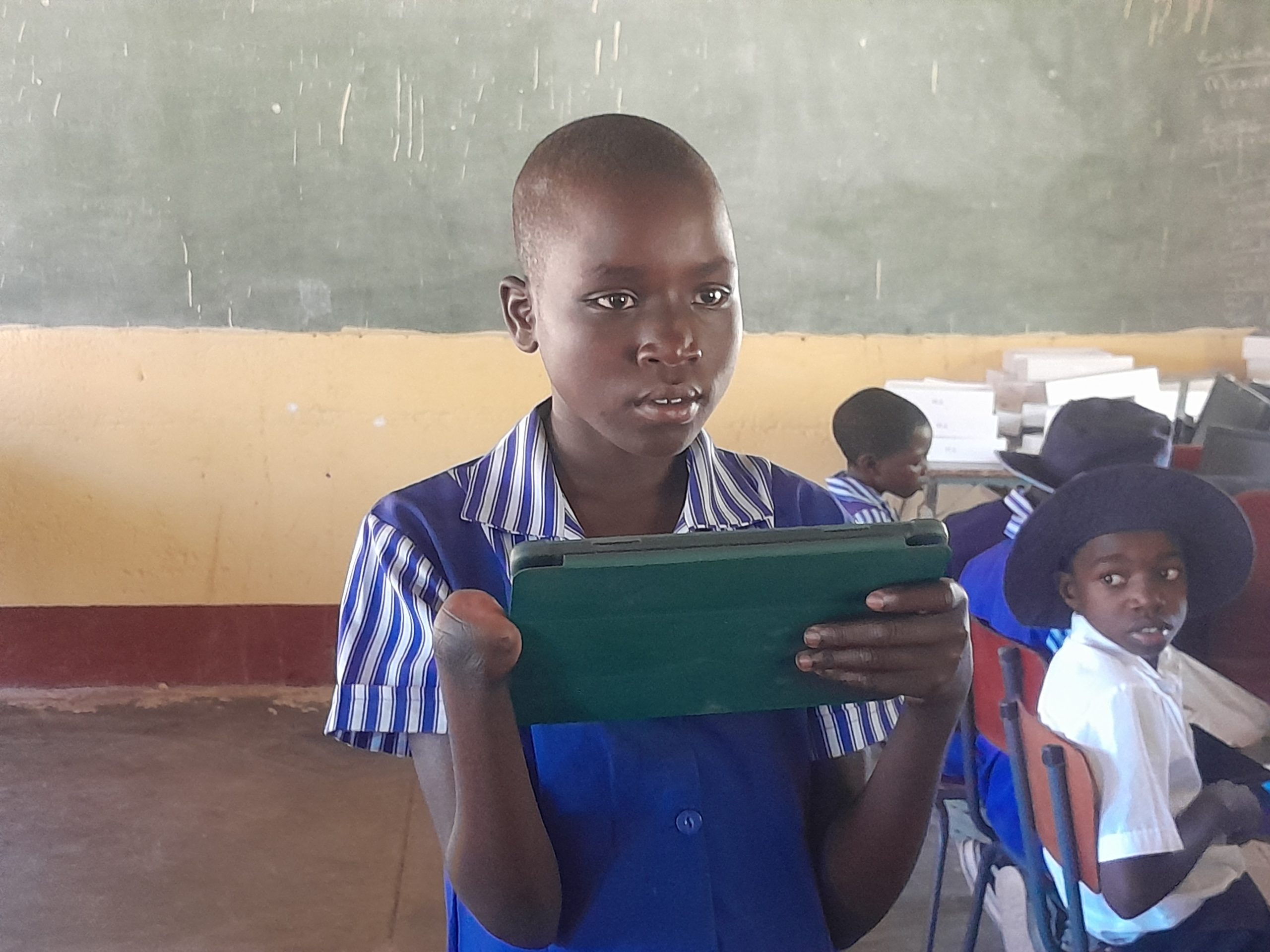
For 12-year-old Nenyasha Mukomba, a Grade Five pupil born with a congenital limb difference affecting her right hand, the introduction of digital learning has been life-changing.
Previously, writing classwork was an exhausting task as she had to rely on one hand. But access to a tablet and other digital devices has eased the burden, allowing her to type and complete schoolwork with greater ease
“Computers and tablets ease my schoolwork because they have keys that are easy to press for typing, ” she said.
Nenyasha’s experience highlights how technology can help bridge learning gaps for children with disabilities, giving them opportunities to participate alongside their peers without being disadvantaged by conventional classroom methods.
St Michael’s is among the schools benefiting from the Government’s digital learning initiative, having received seven projectors, seven laptops and 20 tablets in February.
Speaking during a recent visit to the school, Ministry of Primary and Secondary Education Communication Director Taungana Ndoro said the programme was transforming the learning experience, particularly in rural communities.
“The use of technology is not only reducing the workload for teachers but has also ensured learning is much more interactive and engaging, while pupils access digital resources and learn independently.
“Pupils can now learn on their own and do not always need a teacher to be physically present. Teachers are now working more as facilitators of the gadgets,” Ndoro said.
Beyond improving access to digital learning resources, the intervention is creating opportunities for learners with different abilities to engage with lessons using tools that better accommodate their individual needs.
The programme is funded by the United Kingdom Government through the Foreign, Commonwealth and Development Office (FCDO), under the Teacher Effectiveness and Equitable Access for Children (TEACH) programme.
It builds on solar power infrastructure installed at the school with support from UNICEF in 2023.
For learners such as Nenyasha, the impact goes beyond introducing technology into the classroom. It is about making education more accessible, reducing barriers to participation, and giving every child a fairer opportunity to learn.