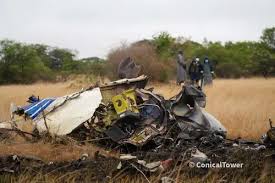
The tragic helicopter crash that killed Zimbabwean businessman Wicknell Chivayo, his wife Lucy Muteke, and other passengers has once again placed an uncomfortable question before the public, just how safe is a helicopter when the weather turns bad?
The answer is more complicated than simply saying that helicopters are unsafe in bad weather. Modern helicopters can be operated safely in demanding weather conditions when the aircraft, pilot, equipment, route and operating rules are appropriate.
But poor visibility, cloud, heavy rain, thunderstorms, strong winds, turbulence, wind shear and icing can rapidly increase the risks.
And aviation authorities are clear about one particular danger, a helicopter flying under visual flight rules can become extremely vulnerable when it inadvertently enters instrument meteorological conditions (IMC).
The European Union Aviation Safety Agency (EASA) warns that when pilots lose visual references after entering cloud or severe weather, spatial disorientation can occur and controlling, navigating and communicating with the aircraft can become extremely difficult. EASA says inadvertent VFR-to-IMC encounters remain a leading cause of fatal weather-related accidents in general aviation.
In the Chivayo tragedy, Zimbabwean authorities have not yet established the cause of the crash. The Civil Aviation Authority of Zimbabwe recovered the helicopter’s black box, while preliminary findings showed that fuel spilled after impact and a fire followed.
However, a member of Chivayo’s security team, who was travelling in another helicopter, reportedly said that the aircraft encountered bad weather during the flight.
That observation is significant, but it is not yet proof that weather caused the crash.
The investigation remains ongoing.
That distinction matters.
A helicopter crash can have multiple contributing factors, weather, pilot decision-making, mechanical problems, visibility, terrain, navigation, or a combination of circumstances.
Only a formal investigation can establish causation.
A particularly important regional example came from Malawi in June 2024, although it involved a military fixed-wing aircraft rather than a helicopter.
Vice President Saulos Chilima and nine others died when their aircraft crashed in the Chikangawa Forest after encountering poor weather and visibility while travelling from Lilongwe to Mzuzu.
An official Commission of Inquiry later concluded that bad weather was the greatest cause of the accident, identifying fog, poor visibility and worsening conditions among the environmental factors.
The inquiry also found human factors, including inadequate weather information before the flight.
The tragedy demonstrates a fundamental aviation principle, weather is not merely something a pilot observes but it is something that must be actively incorporated into the decision to fly.
Europe provides numerous documented examples of aircraft encountering serious problems after entering poor weather.
In Britain, an investigation into a Bell 206 helicopter that crashed in North Yorkshire in 2018 found that the aircraft encountered low cloud and reduced visibility.
After entering cloud, the pilot likely became spatially disorientated and lost control.
The pilot died.
Investigators found no evidence of a pre-existing defect in the helicopter or its engine.
Another British case involved a Robinson R66 in Buckinghamshire in June 2025.
The helicopter entered IMC shortly after take-off.
The pilot, who was not qualified to fly solely on instruments, subsequently lost control after the autopilot was disengaged.
The helicopter emerged from cloud in an extreme attitude before the pilot recovered control; the aircraft was significantly damaged but the pilot survived.
These cases illustrate why aviation experts repeatedly warn about VFR into IMC, essentially, flying visually until weather suddenly becomes too poor to maintain outside visual references.
When people hear that an aircraft encountered “bad weather”, they often imagine heavy rain.
EASA identifies thunderstorms and convective weather, turbulence, high winds, updrafts and downdrafts, microbursts, wind shear, hail, lightning and icing among the significant adverse-weather threats facing rotorcraft.
These conditions can rapidly affect an aircraft’s performance and handling.
For helicopters, strong and rapidly changing winds can be particularly challenging during take-off, landing and low-level flight.
Cloud and fog present another danger because a pilot flying visually can suddenly lose the external references needed to maintain orientation.
So, are helicopters unsafe in bad weather? Not necessarily.
The more accurate conclusion is that helicopters have operating limits, and weather can push a flight beyond those limits very quickly.
European regulations therefore require operators to consider deteriorating weather when planning flights, including having suitable alternatives for flights conducted in instrument meteorological conditions.
For helicopters operating under visual conditions, the principle is even simpler: if visibility and cloud conditions fall below the pilot’s permitted and safe operating minima, the flight should be abandoned, delayed or redirected.
The crashes and incidents tell a common story, even though their individual causes differ.
The helicopter itself is not necessarily the danger.
The danger comes when weather, aircraft capability, pilot qualification, visibility and operational decisions collide.
That is why the investigation into the Chivayo crash matters.
It should answer the questions that speculation cannot: What were the weather conditions? What did the pilots know before departure? What did they encounter during the flight? Was the helicopter operating within its prescribed limits? Was there a mechanical problem? Was visibility deteriorating? And, crucially, could the flight have been safely delayed, diverted or terminated?
Until those questions are answered, saying that bad weather caused the Chivayo crash would be premature.
But the broader aviation record offers a clear warning.
When the sky changes, the rules of the flight change with it.
A helicopter may be capable of extraordinary things, flying into remote areas, hovering over difficult terrain, transporting people quickly and operating where conventional aircraft cannot. But it is still an aircraft, and neither wealth, urgency nor technology can negotiate with severe weather.
Sometimes the safest flight is the one that waits on the ground.
And sometimes, when the weather changes after take-off, the most important decision a pilot can make is not how to continue the journey , but when to turn back.