At the centre of the present constitutional debate lies a historical fact that is as instructive as it is frequently overlooked.
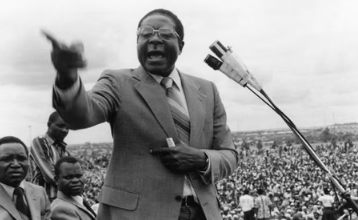
When majority rule dawned in 1980, national leadership emerged through Parliament itself.
Following a nationwide election conducted under universal suffrage, ZANU-PF secured 57 of the 80 contested seats, thereby commanding a decisive majority in the 100-member House of Assembly.
From that parliamentary mandate arose the premiership of Robert Mugabe.
The people voted; Parliament embodied their will; executive authority flowed from that democratic chain of legitimacy.
This constitutional lineage is now being invoked in support of Bill Number 3, whose critics insist that any system in which national leadership is elected by Parliament rather than directly by popular ballot violates the cherished principle of “one man, one vote”.
Yet the events of 1980 suggest otherwise.
Parliamentary election of a head of government was not an aberration imposed upon democracy; it was the mechanism through which democratic majority rule was first realised.
To appreciate the force of that argument, one must situate the liberation struggle within its proper constitutional context.
The demand for “one man, one vote” was not a narrow call for a particular electoral mechanism.
It was a profound rejection of a political order designed to exclude the majority from meaningful participation in governance.
The constitutional settlement of 1923 and its subsequent revisions entrenched formidable barriers to political participation.
Voting rights were tied to stringent property, income, and educational qualifications that bore little relation to demographic reality.
By the 1960s, the electorate had been engineered into a striking imbalance: roughly twelve white voters for every one Black voter, despite a population ratio of approximately twenty to one in favour of the African majority.
The 1961 Constitution deepened this disparity through the dual “A” and “B” Roll system. The privileged “A” roll, defined by exacting qualifications, elected fifty representatives — overwhelmingly white.
The “B” roll, ostensibly more inclusive yet structurally constrained, elected a mere fifteen members, largely Black.
Representation was thus carefully calibrated to preserve minority control whilst offering only the semblance of inclusion.
The 1969 constitutional framework, introduced after unilateral independence, hardened minority rule further still.
Parliamentary representation ensured that a small settler population retained decisive authority over millions of African citizens.
The structure of governance was not merely unequal; it was intentionally insulated against democratic transformation.
Even the 1979 election, which produced Abel Muzorewa as Prime Minister, failed to secure international recognition.
The United Nations Security Council declared the process null and void on the grounds that the constitutional framework preserved disproportionate minority power.
In the eyes of the international community, democracy required not symbolic participation but genuine political equality.
It was precisely this inequitable order that the liberation struggle sought to dismantle. Independence in 1980 did not merely introduce a new leadership; it inaugurated a new constitutional logic.
Universal suffrage established equal political citizenship. Parliament became the institutional expression of that equality.
From Parliament emerged executive authority.
Those now contending that parliamentary election of a President is incompatible with the ideals of liberation must therefore confront an unavoidable historical continuity: the foundational moment of democratic governance itself operated within that very framework.
Supporters of Bill Number 3 argue that constitutional systems must not only reflect democratic choice but also safeguard national cohesion.
They contend that intensely personalised presidential contests, particularly within polarised political environments, risk deepening division rather than fostering unity.
Parliamentary election, by contrast, is presented as a mechanism that encourages negotiation, coalition-building, and collective responsibility.
Comparative experience is often cited to underscore the dangers of prolonged electoral contestation.
In Mozambique, disputed electoral outcomes have at times produced extended periods of instability, disrupting governance and undermining economic confidence. Proponents of reform maintain that constitutional design must seek not only legitimacy but durability.
There is also the matter of public expenditure. Nationwide presidential elections demand considerable financial resources — funds which advocates of reform argue might be more effectively deployed in development priorities such as infrastructure, healthcare, and education.
In this view, constitutional reform is not a retreat from democracy but an adjustment in institutional architecture intended to stabilise it.
The debate over Bill Number 3 is therefore not merely technical; it is historical, philosophical, and constitutional in equal measure.
The events of 1980 offer a compelling reference point. Majority rule was realised when the electorate chose its representatives and Parliament, in turn, constituted national leadership.
For proponents of reform, that precedent affirms a central claim: parliamentary election of a head of state does not negate “one man, one vote”.
It is, rather, one of the constitutional pathways through which that principle may be expressed.