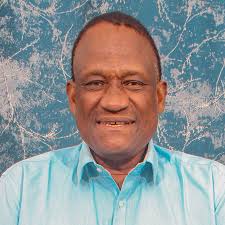
By Prince Masuka
There are broadcasters one listens to.
Then there are broadcasters one studies.
John Masuku belonged to the latter.
With his passing, Zimbabwe did not simply lose a veteran media practitioner; it lost a living
institution of broadcasting discipline, credibility, and craft.
Masuku, the distinguished Zimbabwean broadcaster, media trainer, and communications strategist, died at the age of 74 at his home in Mabelreign, Harare.
His death, announced by his family, came with a detail that now feels inseparable from his legacy: he passed away on World Radio Day.
It was a coincidence that felt almost scripted by history.
Radio was not merely his profession. It was his lifelong conversation with society.
The making of a broadcaster
Born in Harare, Masuku’s entry into broadcasting predates Zimbabwe’s independence, a
detail that situates him within a rare generation of pioneers who witnessed, navigated, and
shaped media across political eras.
In 1974, he began his career at the Zimbabwe Broadcasting Corporation, then operating
under a different national reality. What followed was not simply longevity, but ascent defined by competence.
From radio announcer and producer, Masuku rose through the ranks to become General
Manager of Radio Services, overseeing four national radio stations. It was a role that
demanded not just voice, but vision, editorial judgment, leadership, and a deep understanding
of broadcasting as a public trust.
Those who worked with him often describe the same constants: precision, structure, and
standards.
Masuku treated broadcasting not as performance, but as responsibility.
Beyond the State broadcaster.
When Masuku left ZBC in 2002, he did not retreat from broadcasting. He repositioned
himself within it.
As Executive Director of radio Voice of the People, he became part of Zimbabwe’s evolving
independent media landscape, one defined by contestation, resilience, and advocacy.
Here, Masuku’s role extended beyond management.
He became mentor, trainer, and custodian of professional ethics.
His work would later earn international recognition, including honours tied to media freedom
and human rights reporting. Yet, even accolades seemed secondary to what clearly drove him:
sustaining integrity within the craft.
The international professional
Masuku’s career defied confinement to national borders.
He trained at globally respected institutions, including the BBC in London and Radio
Deutsche Welle in Cologne, experiences that sharpened what colleagues often called his
“Broadcasting discipline.”
That discipline would later find global relevance when he was appointed World Radio Day
Coordinator by UNESCO.
In that role, Masuku helped shape international conversations about radio’s future, from
technology shifts to audience engagement, demonstrating that Zimbabwean expertise could
speak authoritatively within global media forums.
It was recognition that mirrored what many already knew:
Masuku did not merely work in broadcasting.
He understood it.
The public communicator.
Masuku’s voice also carried weight beyond studio walls.
In 2018, he served as spokesperson for the Motlanthe Commission, a nationally significant
assignment that placed him at the intersection of communication, politics, and public
accountability.
It was a role requiring clarity under scrutiny, a skillset Masuku had refined over decades
behind the microphone.
The mentor many remember.
For many younger media practitioners, John Masuku was first encountered not as a radio voice, but as a teacher.
I count myself among them.
During my HEXCO National Diploma assessment, Masuku was the man evaluating my work.
To be assessed by someone of his stature carried an undeniable weight.
Yet what remains memorable was not intimidation, but presence.
He listened carefully. He questioned deliberately. His feedback was firm, measured, and
anchored in principle. One immediately sensed that broadcasting, to him, was a discipline
long before it was an industry.
Masuku did not flatter.
He refined.
Faith, communication, and service
Beyond mainstream media, Masuku invested deeply in church communications, an extension
of his belief in responsible storytelling.
A devoted member of St Peter’s Mabelreign Anglican Church, he contributed to The
Trumpet, the magazine of the Anglican Diocese of Harare, where he served as editor.
In that role, he applied the same professional rigour he brought to national broadcasting.
Stories mattered.
Structure mattered.
Accuracy mattered.
At a church communicators’ workshop held at St Mary’s Magdalene Anglican Church,
Masuku stood before participants not as a legend, but as a lecturer.
He spoke about news writing with clarity stripped of mystique.
Journalism, he insisted, was neither glamour nor improvisation.
It was responsibility, discipline, and credibility.
The man behind the voice
Masuku’s professional authority was matched by personal presence.
Impeccably dressed.
Calm in demeanour.
Often wearing his trademark broad smile, sometimes punctuated by a gentle giggle.
Warmth never diluted standards.
He embodied a lesson many overlook:
Credibility is constructed long before the microphone is switched on.
A legacy that outlives airtime
In broadcasting, voices fade.
Recordings archive.
Programmes end.
But standards endure.
John Masuku’s legacy lives not merely in awards or titles, but in the generations of
broadcasters, journalists, and communicators shaped by his insistence on discipline, integrity, and craft.
He did not simply occupy airtime.
He defined expectations.
Masuku’s passing marks the end of a life, but not the end of an influence. His imprint remains
audible, in professional habits, editorial decisions, and the quiet confidence of those who
internalised his lessons.
Some broadcasters are remembered for what they said.
John Masuku will be remembered for what he stood for.
And in broadcasting, that distinction is everything.