- UNDP and partners are strengthening trust in public service by increasing integrity, transparency, and accountability across rural Zimbabwe.
- Through Mobile One Stop Centers and complaint mechanisms, communities now have greater access to justice, health, and legal services.
https://www.undp.org/zimbabwe/stories/frontline-voices
- Supported by the INTEGRA Initiative and the Judith Neilson Foundation, these efforts are empowering women, men, and youth to speak out, rebuild trust, and transform their communities.
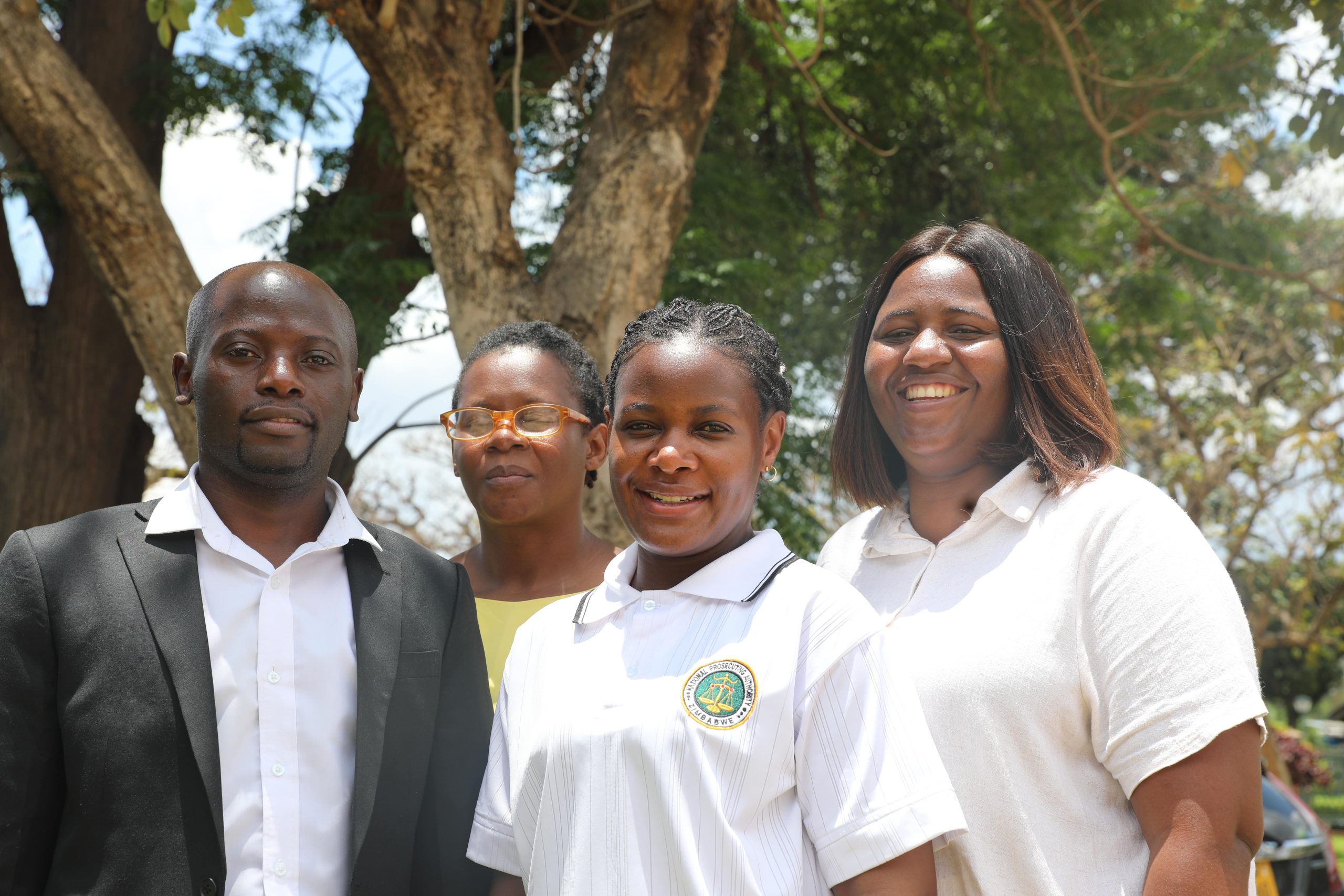
The faces behind the impact bringing hope, and justice to GBV survivors across Zimbabwe: Picture: UNDP
In rural Zimbabwe, where limited access and distance often silence communities, integrity has become a powerful voice.
Transparent leadership and ethical public service are restoring trust, showing that transformative governance is not abstract, rather, it is life life-changing.
Through honest leadership and collective accountability, communities are building trust in public service and proving that transparency is transforming lives.
Registry staff, nurses, and legal officers are the new face of accountable governance.
Their commitment to fairness and transparency ensures that every service, from health to documentation, reaches people with dignity and honesty.
In their hands, public service is becoming what it was always meant to be: a promise kept.
Roseline Mafukidze, a Social Scientist, shared her experiences in the communities.
Despite the weight of the pain they witness daily, she continues her work, driven by the lives she touches.
She encounters heartbreaking stories yet demands action, like that of a five-year-old girl who saw her mother being killed by her father.
She also grappled with the compounded trauma projected onto the child by her grieving grandparents, whose own pain keeps circling back into the child’s life.
“On average, I counsel about 20 people daily in each community outreach session, each case leaving a profound mark,” recalled Roseline Mafukidze, Social Scientist.
“It is my love for people that keeps me going, sometimes the best help I give isn’t resources, it’s listening, connecting with people, and reminding them that government still cares,” reflects Roseline.
“Every conversation is different, and each story moves you in a unique way. At the end of every case, the help you provide leaves a lasting impact, and that makes every bit of effort worth it.” She added.
What began as access to services has become something bigger: a transformation in trust, dialogue, and hope.
In places where help once felt distant, people are discovering that their voices matter, and that support is finally within reach.
The change has been progressive, help has finally found its way to those who need it most. Men and women alike are stepping forward, breaking long-held silence.
Through the Mobile One Stop Centers (MOSC), complaint-handling mechanisms and a toll-free number are now accessible even in hard-to-reach communities, giving people the power to seek both legal and health services.
“At first, many thought gender services were only for women,” says Mungayi Confidence, Gender Champion and Regional Coordinator for Manicaland. “Now, men are sharing their struggles too.
It’s a relief for them to be heard.” He added.
In Mutoko during the MOSC, a man came forward to report a rape case – a rare and courageous act in a community where silence often shields injustice. While reporting, he sensed confusion clouding the process.
It was through the collaborative efforts of the MOSC that the situation began to change. With support from the MOSC teams, he was able to meet directly with the investigating officer; the path toward justice began to take shape.
For Elizabeth Vikitara, Regional Public Prosecutor for Mashonaland East Province, stories like these drive her passion for justice.
“I am driven by the need to uphold the rights of women and girls and to act in their best interest,” she says. Through male engagement sessions, she raises awareness on sexual and criminal offences, encouraging open dialogue and accountability.
Working closely with survivors of gender-based violence, Elizabeth provides both legal advice and empowerment, ensuring that justice is not just pursued but understood and felt. Her work bridges the gap between the law and the people it serves, transforming fear into confidence and silence into action.
Responding to Gender-Based Violence (GBV) has revealed a difficult truth: many survivors remain vulnerable simply because they lack knowledge of the legal steps to take when faced with abuse or injustice.
Yet, amidst these challenges, women and girls are beginning to rise, finding the courage to report, speak out, and reclaim their power.
For Sithembiso Sweswe, Legal Officer at Pamuhacha, affectionately known as the Village Advocate, this courage is what keeps her going.
“Seeing women and girls gather the strength to speak out is what drives me to continue, despite all odds,” she says.
Her mission extends beyond legal support; she is determined to empower people both legally and economically, understanding that justice must be accompanied by independence.
Each day brings a new challenge. Sometimes it starts with an early morning call from a community childcare worker deep in the rural wards, a referral for a child abuse case that needs urgent attention.
With determination and transparency, Sithembiso assesses, and connects with partners to ensure the child finds justice and safety.
“They know they can call me,” she said. “Together with our stakeholders, we always find a way forward.”
As the nation prepares for the 16 Days of Activism Against Gender-Based Violence, Sithembiso’s message is bold “I encourage women to economically empower themselves and their children. Poverty fuels dependency, and dependency traps people in cycles of violence. Breaking that cycle begins with empowerment.”
Through her work, Sithembiso is proving that justice does not only come from courtrooms; it grows in communities, in courage, and in every individual who decides that silence is no longer an option.
To reinforce these community-driven efforts, the United Nations Development Programme (UNDP) convened a four-day workshop in Mutare, uniting key stakeholders from government ministries, civil society organizations, and community representatives.
The workshop served as a platform to strengthen integrity and accountability in public service delivery, fostering open dialogue on how to rebuild trust between citizens and public institutions, a vital foundation for effective governance and sustainable development.
All these transformative efforts are made possible through the United Nations Development Programme’s (UNDP) Funding Window INTEGRA Initiative, implemented in collaboration with the Judith Neilson Foundation.
Together, they are building bridges between communities and justice, ensuring that even in the most remote corners of Zimbabwe, no one is left behind.